
 Back
Robots in the orchard
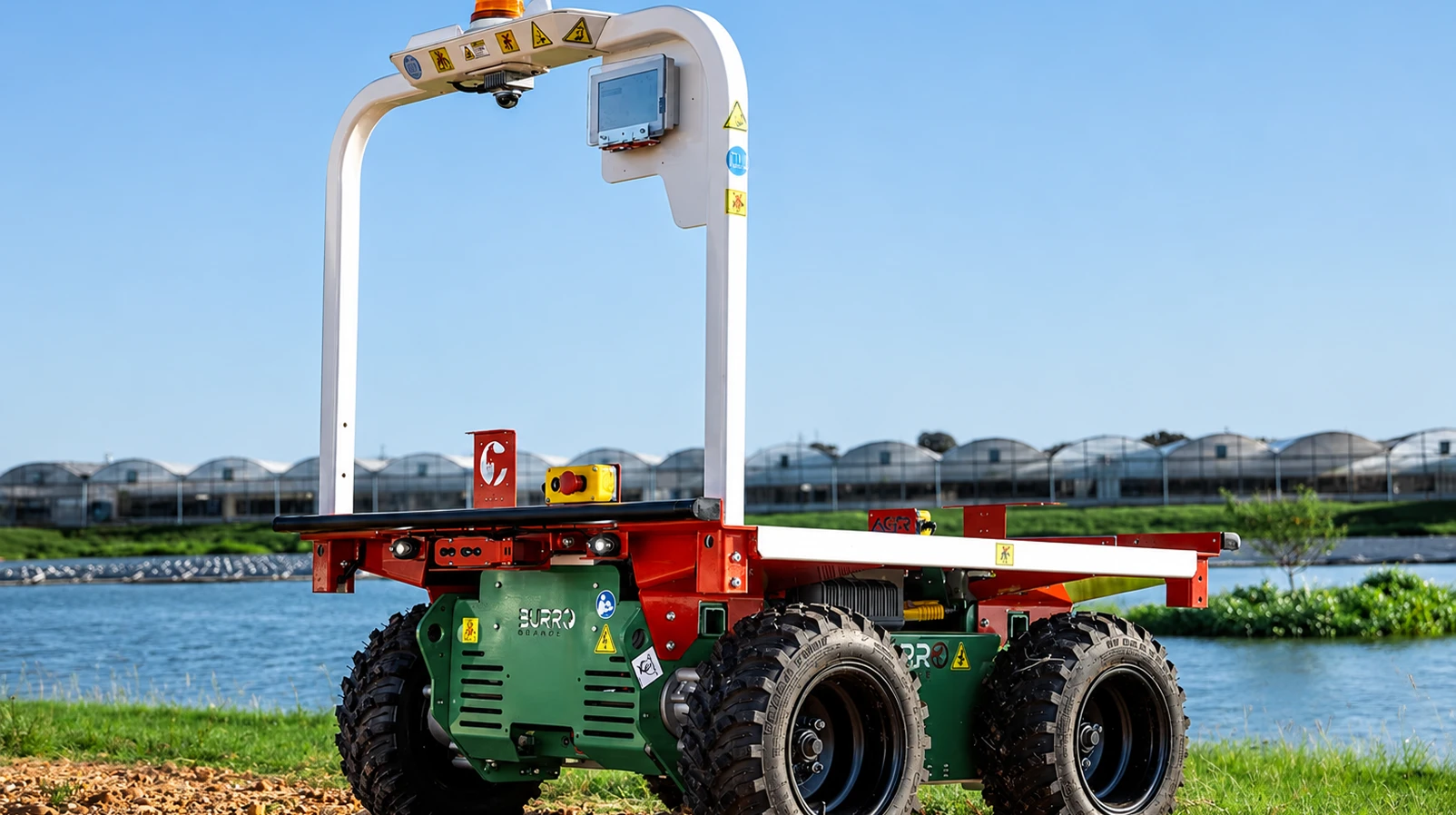
Agri Automation, based in New Zealand and Australia, deploys full autonomy in horticulture. Founder Chris Clifford leads a team that installs GoTrack retrofit kits on horticultural tractors — turning legacy equipment into unmanned systems capable of repeatable, complex field tasks. Alongside those tractors, the company partners with Burro, whose electric field robots handle transport and light mechanized work.
Whether carrying crates of avocados or autonomously mowing under trees, each Burro relies on high-precision GNSS. That precision is now delivered through GEODNET’s global infrastructure rather than base stations the team has to set up and maintain itself.
Why sub-inch GNSS is a requirement
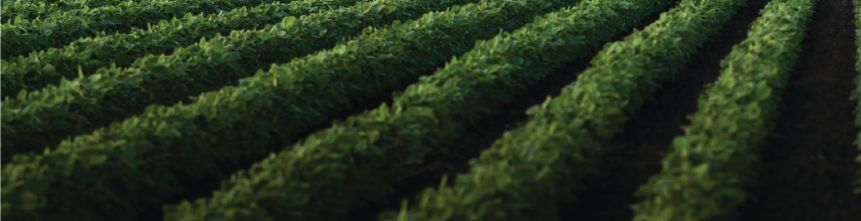
In permanent cropping, labor shortages are critical and row spacing is tight. Sub-inch GNSS performance is not a bonus — it is a requirement. GEODNET’s corrections network meets that threshold across remote orchards, vineyards and farms where traditional RTK services fail to deliver consistent coverage.
How GEODNET fits in
Agri Automation benchmarked GEODNET against the legacy RTK systems it had been using. Clifford summarized the results in three phrases: faster convergence, more continuity, lower costs.
- Faster convergence — robots and retrofitted tractors reach an RTK fix sooner at the start of each job.
- More continuity — coverage holds across remote orchards and under tree canopy where legacy services dropped out.
- Lower costs — one subscription replaces region-specific corrections and self-managed base stations.
“Our systems are recording and replaying everything,” Clifford said. “You mow, you spray, you record. Then next time — same machine, same job, no driver.”
What the partnership delivers
- Repeatable autonomy — recorded routes are replayed by the same machine for the same job, with no driver.
- Region-agnostic deployment — the same configuration works across Australian and New Zealand sites.
- Coverage where legacy RTK failed — remote orchards, vineyards and farms get consistent corrections.
- One network for tractors and robots — GoTrack retrofits and Burro robots share the same correction stream.
From deployment to work order
- 1. Install a GoTrack retrofit kit on the tractor, or stage a Burro robot at the block.
- 2. Connect the receiver to GEODNET over NTRIP — no local base station required.
- 3. Record the task once: mow, spray or carry, with an operator at the controls.
- 4. Replay the recorded route autonomously on the next pass.
- 5. Scale the fleet across sites without re-engineering corrections for each region.

Centimeter-level corrections from 20,000+ stations in 140+ countries. RTCM 3.2 over NTRIP — works with any modern GNSS receiver, no base station required.

Key facts
- Burro robots carry crates of avocados and autonomously mow under trees.
- GEODNET corrections reach 140+ countries from more than 20,000 base stations.
- Agri Automation reported better performance than legacy RTK systems in its own tests.